
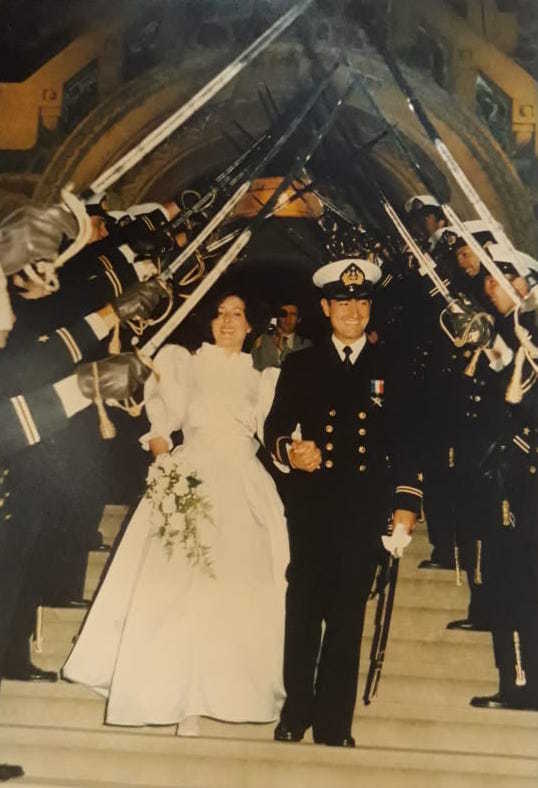
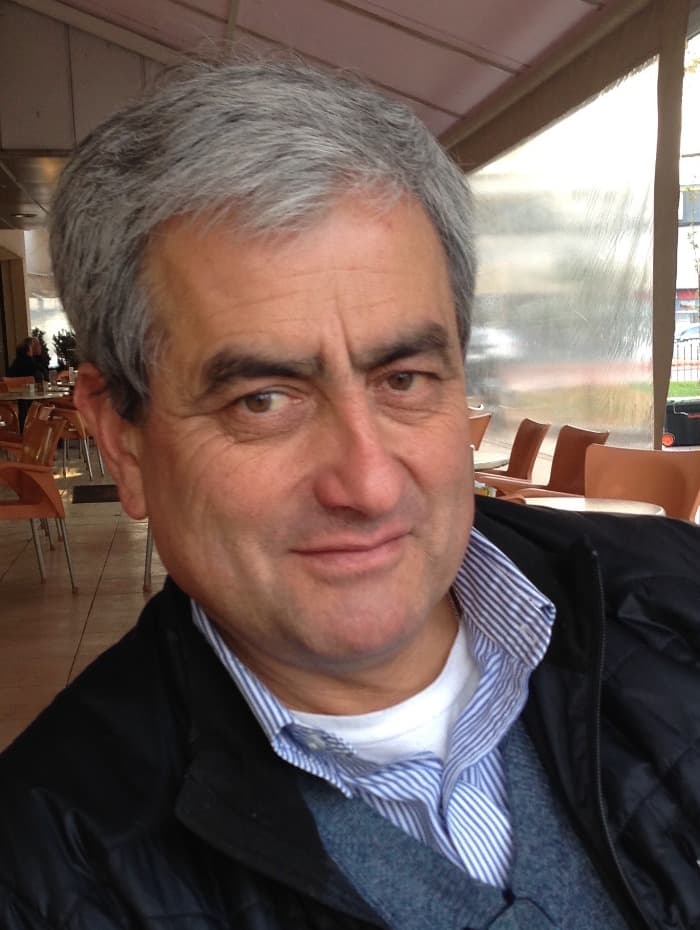
I was 28 years old during the plebiscite. I had to make an effort to remember because many years have passed since that event. So, yesterday, curiously, I started by searching on Google to find out which day it was in ’88, and I saw that it was October 5th. Immediately, I related it to the fact that on October 18th, I got married to my wife, Ivonne. So, the truth is that for obvious reasons, my main concern around those days was the upcoming wedding, the celebration, the ceremony. But I do have and keep some memories of what that event was like. Particularly, I remember the outcome and the feeling it produced in me regarding the plebiscite result. I am an officer in the Navy. In ’88, I was on board the light destroyer La Torre. As a Navy officer, particularly during the previous years between ’83 and ’86, I was a student, studying my specialty as a Naval Engineer. During those years, both to me and to the Armed Forces in general, because this was a military government, right? We had a lot of internal security duties. Therefore, the question and what we felt a lot was that, in general, within the officers’ corps, many of us were part of this military government. So, I would say that in all of us, there was a sense of certainty that we were doing very well. And apparently, the result was going to be a Yes, an approval to continue. Well, and the result was a No. I want to delve a little deeper. In my particular case, I come from a family of sailors. There are three brothers in my family. My older brother was also a Navy officer, and my younger brother is still in service. My father was also a sailor; he reached the rank of Admiral and was Minister of Education during the military government. Therefore, we had a close relationship with General Pinochet’s government and all that it entailed. So, as I told you, we strongly believed, or rather, we felt that it was a government that was doing very well. That is the truth. And the reasons why the military government came into power, even to this day, I am convinced, were not because the military suddenly decided to take power, but rather, it was a situation. Why did we reach this point where the Armed Forces assumed control of the government? It was due to a gradual loss of institutional strength, and in this country, historically, the Armed Forces have had a very direct role within the institutions.
Having said that, on that day, I went to vote. I don’t remember where exactly. The truth is that it must have been where I usually voted, which was in the Miraflores district because I live in Viña, my family is from Viña, and normally, one votes where they live, so to speak. So, I have always been at polling station 101, voting in the same place. I imagine that if it was the same polling station where I voted, I went back to my ship because one also has duties to fulfill during the vote counting process. The Armed Forces are in control of the polling stations here in Chile, so it must have been a standard procedure, like the many times we have voted in Chile. We always have that civic concept that the role of the Armed Forces in maintaining order gives stability to this country. I would say that the Armed Forces have had a stabilizing function within the institutions. We, as members of the institutions, should not engage in or allow political proselytism. That should not exist within the institutions. That doesn’t mean that one doesn’t have thoughts or political inclinations, but because we have always understood that our institutions, our role in defending the country, is above the contingent political issues.
The political contingency operates at a level that exists in the public sphere, but as members of the Armed Forces, we have a state function, and we should not engage in daily political debates, so to speak. That is one of the things that, in general terms, is maintained unless the situation becomes tense, right? There are situations in which we enter crises, and when the rule of law is overwhelmed, there are events that go beyond the situation. However, it is important to note that the plebiscite was an event, right? A military government forcefully took control of the government, established a Constitution and a transition plan, and handed it over. I would say that all of that was planned. The Navy, throughout that period, had a very important role under Admiral Merino, who headed the Judicial Power, played one role, and on the other side, there was the President, General Pinochet. Therefore, they tried to divide the powers, establish an institutional framework, recover institutionalism, and have a long-term plan because it lasted several years, almost twenty years, right? To be precise, it was 17 years of government. But it was conceived and planned from the beginning that a plebiscite would be called, and whether it succeeded or not, well…
That particular day, according to my recollection or subsequent readings, was tense because it was unclear whether Pinochet would hand over the government or not. There were certain tensions. But I would say that the strong democratic conviction of those who led the process prevailed. I believe Admiral Merino played a very important role as a catalyst for the other parties and enforced what had been agreed upon in the Constitution. And if the plebiscite was unfavorable and the No side won, well, it had to be respected, and that allowed for a subsequent transition to democracy, which we find ourselves in today, and which has at least been stable. Today we can say that, thanks to all these processes, Chile has been a country that has managed to progress, and hopefully, we will overcome the underdevelopment we find ourselves in. Hopefully, we will finally find peace because I still see the country very unsettled and tense, with two diametrically opposed positions that do not benefit the country.